

The Ultimate Guide to Art Sizing: What Works Best Where
One of the most common questions I get as an artist is: “What size art should I get for my space?” And it’s a great one—because the size of your artwork can completely change how a room feels. A too-small piece can look lost and underwhelming, while the right-sized piece adds depth, balance, and that "wow" factor we all want.
Whether you’re styling a bedroom, living room, hallway, or nook, this guide will help you confidently choose the best art size for every space in your home.
 1. General Rule of Thumb: Bigger is Better
When in doubt, go larger. Most people err on the side of choosing art that’s too small. Here’s a quick formula to start with:
- Aim for art that spans about 2/3 to 3/4 the width of the furniture it hangs above.
- Always consider the height of the wall—tall ceilings can handle taller or more vertical pieces, while lower ceilings often do better with horizontal compositions or groupings.
 2. Over a Sofa
- Ideal Width: 2/3 to 3/4 the length of the sofa.
- Spacing: Leave 6–12 inches between the top of the sofa and the bottom of the art.
- Popular Sizes:
- For standard 84" sofas: try 36x48" or 40x60" horizontal prints, or diptychs (two 24x36" or 30x40" pieces).
- For smaller loveseats: 24x36" or 30x40" horizontal prints can work beautifully.
👉 Pro Tip: If your art feels too small, try pairing it with a large mat and frame or consider a diptych or triptych for added scale and interest.
 3. Over a Queen or King Bed
- Choose a piece (or series) about 2/3 the total width of the bed.
- Spacing: Position art about 6–10 inches above the headboard.
- Go-To Sizes:
- Queen - One 30x40" or 36x48" horizontal print or two 20x30" vertical pieces (diptych)
- King - One 36x48" or 40x60" horizontal print, two 24x36" vertical pieces (diptych), or three 16x20" vertical pieces
Vertical pieces look elegant when stacked on either side of the bed as well—especially in rooms with high ceilings.
 4. Dining Room or Above a Console
- Width: Again, 2/3 the width of the furniture piece.
- Height: Consider eye-level placement (around 57–60” from the floor to the center of the piece).
- Nice Choices: 24x36" or 30x40" horizontal prints, or a diptych if your console or buffet is particularly long.
This is a perfect area for symmetrical framing or grid layouts if you prefer a more structured feel.
 5. Entryway, Hallways, and Narrow Walls
These spaces love:
- A 24x36" vertical or stacked horizontal prints.
- Small series of 2–3 stacked prints, spaced evenly with 2–4 inches between each.
- Gallery walls for long hallways—mix frames and sizes to add personality and visual rhythm.
 6. Gallery Walls
Want to mix and match? Great! Just remember:
- Lay pieces out on the floor before committing.
- Keep spacing consistent (usually 2–3” between pieces).
- Use painter’s tape to map things out on the wall before nailing.
Ideal mix:
- A large anchor piece (like a 24x36") paired with medium (16x20") and small (8x10", 11x14") works best for balance.
 7. Working With Wall Height
- Standard 8-ft ceilings: Stick with art that stays within the middle third of the wall for best proportions.
- 9+ ft ceilings: Don’t be afraid of oversized or tall vertical pieces—your space can handle it! Think 40x60” size.
- Above wainscoting or paneling: Keep artwork framed cleanly in the space above, usually in the 16–24” height range.
 8. Diptychs
Diptychs (2 pieces) are excellent for:
- Adding drama to larger walls
- Filling awkward or very wide spaces
- Offering visual flow with some breathing room between pieces
👉 Spacing tip: Leave about roughly six inches between each panel, depending on their size.
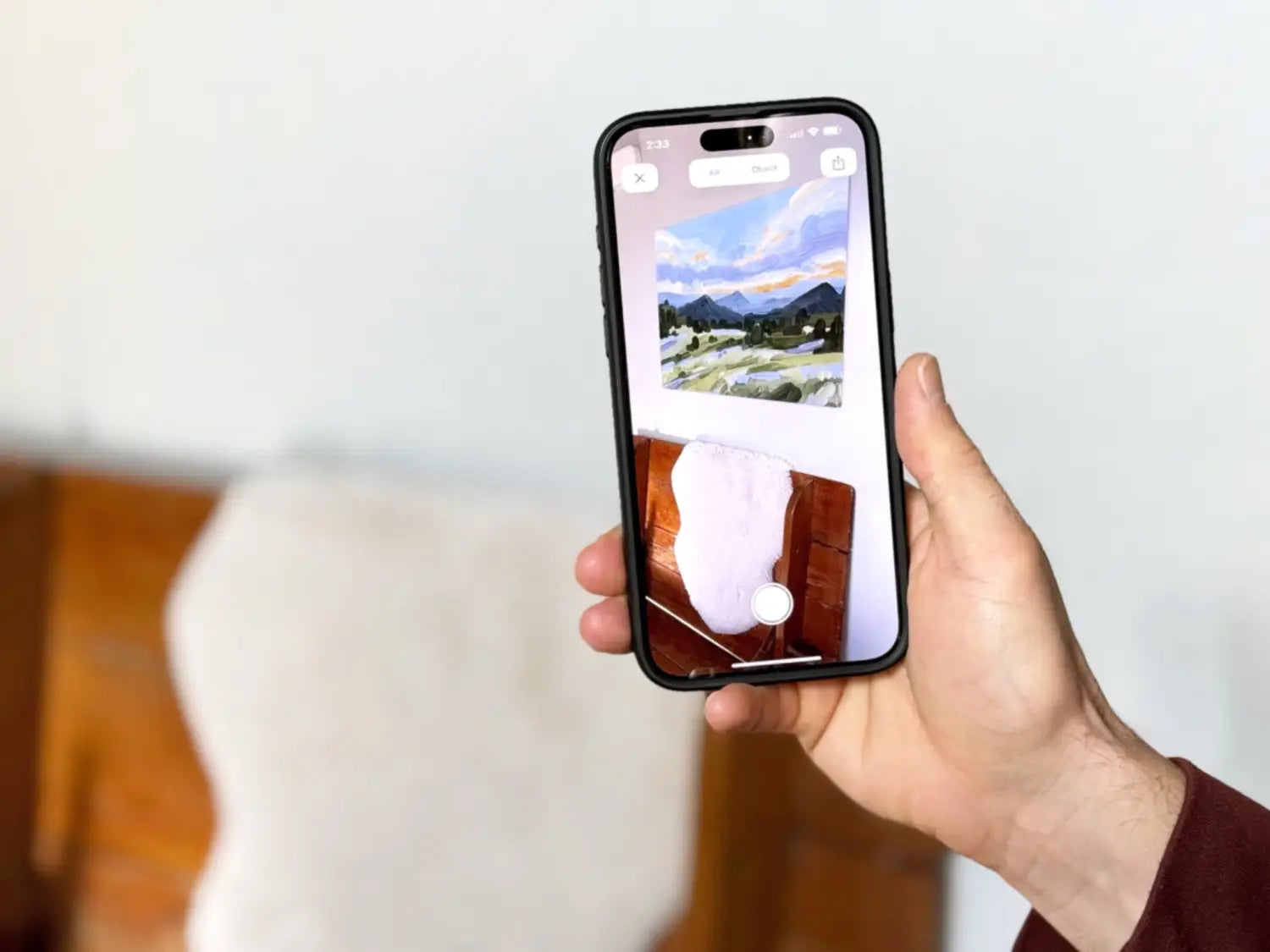 9. Still Not Sure? Use the “View on Your Wall” Tool!
Every art print page on katiegarrisonart.com includes a handy “View on Your Wall” feature. You can see exactly how each piece will look in your own space, to scale—no guessing or measuring required!
Final Thoughts
Art is deeply personal—but size is practical. When you find a piece that speaks to you, don’t let scale scare you away. With a few guidelines and visual tricks, you can make sure your walls look as intentional and beautiful as the rest of your home.
Still have questions? I’m always happy to help you pick the perfect size—just reach out!